“`html
The Role of Music in Social Movements
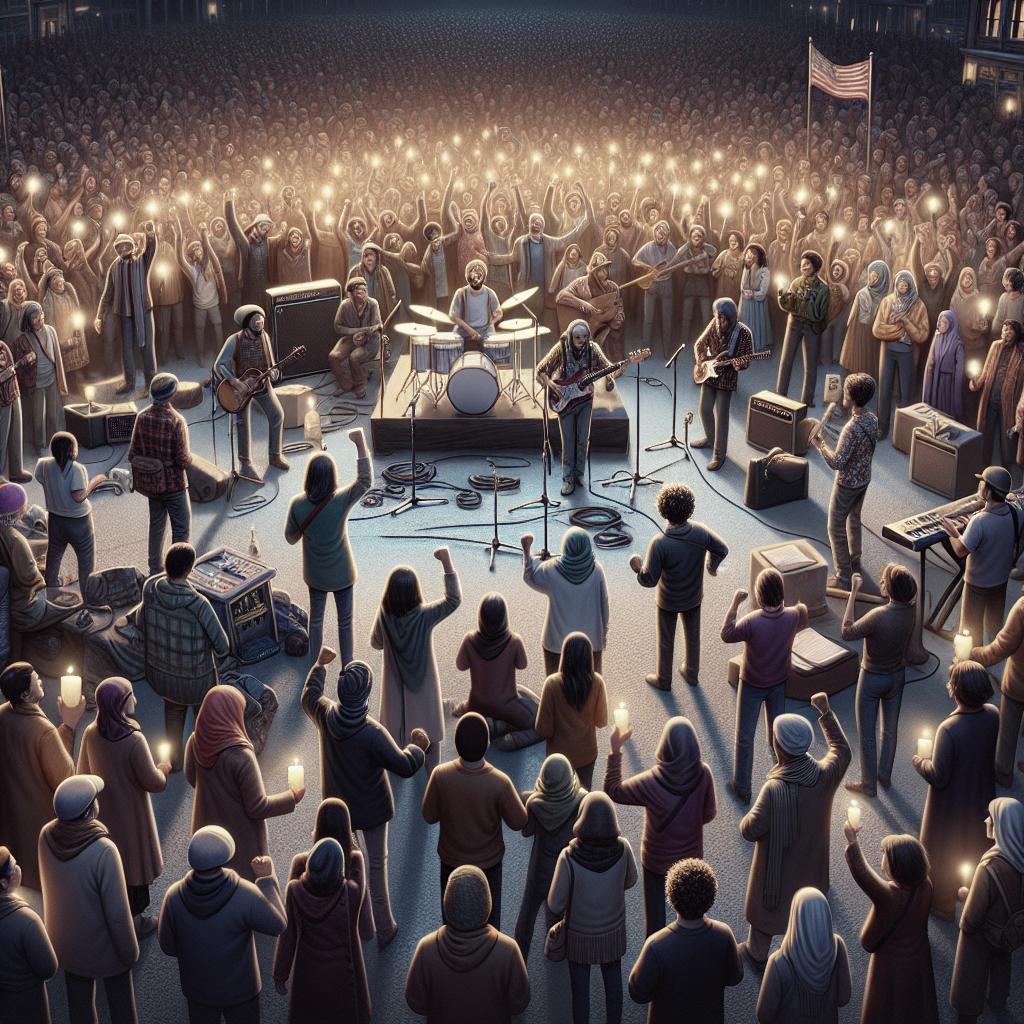
Music has eternally been a catalyst for social change, integrating cultural expressions with political actions to fuel movements that range from labor rights to civil rights. This post explores how music has played an instrumental role in historical and contemporary social movements, from the farmworkers’ movement under the guidance of activists like Cesar Chavez to modern protest songs in democratic and authoritarian states. We’ll delve into the origins and transformative impacts of musical genres like Blues, Jazz, Folk, Rock, Disco, Punk, and Hip-hop. Furthermore, we’ll examine academic perspectives focusing on the music-politics synergy, including social aesthetics, improvisation theory, and the notion of achieving peace through art. A summary table distills the key insights and articulates future prospects for music in continuing to shape social consciousness and solidarity.
Like the movement to unionize industrial workers in the 1930s and the African American civil rights movement in the 1950s and 1960s, the farmworkers’ movement was a singing movement.
The role of music in the farmworkers’ movement mirrors its use in earlier significant social reforms, such as the movement to unionize industrial workers and the African American civil rights movement. These movements were marked by a plethora of songs that not only uplifted spirits during marches and sit-ins but also encapsulated the objectives and ethos of the collective struggle. Music served as both a unifying force for participants and a persuasive medium that captured public attention, raising awareness and sympathy for their causes.
Song lyrics in particular have been crucial, functioning as narrative devices that documented injustices and articulated the visions for a fairer society. The widespread use of music in these movements helped to transport messages across cultural and linguistic boundaries, creating shared experiences and emotions even among disparate groups. This universality of music continues to embed a sense of community and purpose among those fighting for social justice.
They had done so at the urging of Cesar Chavez himself, who understood in his bones the vital role music played in the social life of his people.
Cesar Chavez, the renowned labor leader and civil rights activist, profoundly understood the power of music to shape social narratives and empower disadvantaged communities. He actively encouraged the use of music as a strategic tool in the farmworkers’ movement. By acknowledging the inherent musical traditions within his community, Chavez fostered an environment where music was a communal activity that bolstered morale and strengthened resolve.
Chavez’s strategic use of music made it a hallmark of the farmworkers’ movement. Not only did it preserve and enhance the cultural heritage of his people, but it also allowed their struggles to be communicated more compellingly to the broader public. Inspiring solidarity across various segments of society, music became a democratic voice for the voiceless, offering a vibrant medium through which the stories and dreams of the oppressed were told and heard.
Table of Contents
- 1. Musical Traditions
- a. Origins and Impacts of Blues and Jazz
- b. Folk Music, Rock Music, and Protest Songs
- c. Post-industrial Musical Contestation: Disco, Punk, and Hip-hop
- 2. Contemporary Protest
- a. Communal and Community-based Music Making in Democratic States
- b. Building Social Solidarity against Neo-liberalism
- c. Confrontations with Authoritarian Regimes
- 3. Academic Attention to Music-Politics Links
- 4. References and Further Reading
- Author Information
1. Musical Traditions
a. Origins and Impacts of Blues and Jazz
Blues and Jazz, among the most influential musical genres, originated in African American communities as expressions of struggle, hope, and resilience. These musical forms were deeply rooted in the raw emotions of the African American experience, capturing the complex interplay of joy and sorrow. As Blues articulated the pain and challenges of life, it also served as a cry for justice and change.
Jazz, on the other hand, evolved as a symbol of creative freedom and innovation. Its improvisational nature challenged norms and fostered a spirit of resistance against oppressive structures. Both genres transcended their origins to become global phenomena, influencing countless other musicians and movements. Their impact was particularly felt in the civil rights movement, where songs like Billie Holiday’s “Strange Fruit” vividly illustrated racial injustices, galvanizing public sentiment towards action and reform.
b. Folk Music, Rock Music, and Protest Songs
Folk music has long served as an accessible and powerful voice for activism, often featuring lyrics that tell the stories of common people’s lives and struggles. Artists like Woody Guthrie and Pete Seeger used folk traditions to speak out against inequality and injustice, penning songs that remain iconic in protest music history.
Rock music of the 1960s and 70s, epitomized by artists such as Bob Dylan and Joan Baez, took folk’s poignant storytelling and energized it with rebellious spirit. Songs like Dylan’s “The Times They Are a-Changin’” became anthems that mobilized young generations against war and civil rights issues. These protest songs fused powerful lyrics with compelling rhythms to capture the zeitgeist of their eras, reinforcing solidarity among protesters and amplifying their calls for change.
c. Post-industrial Musical Contestation: Disco, Punk, and Hip-hop
As the world transitioned into a post-industrial era, musical expression evolved to tackle new socials and economic challenges. Disco emerged as a unifying force in the 1970s, particularly among marginalized LGBTQ+ communities. Its upbeat tempos and celebratory lyrics created safe spaces for self-expression and unity, subtly challenging social norms and prejudices.
Punk rock brought a stark contrast with its raw, anti-establishment fervor, promoting rebellious dissent against societal conformity. Fast forward to the late 20th century, Hip-hop arose from urban environments as a direct response to systemic inequalities. Its potent lyricism and rhythm became vehicles for articulating the struggles and aspirations of disenfranchised communities, sparking discourse and action on pressing social issues like race, policing, and economic disparity.
2. Contemporary Protest
a. Communal and Community-based Music Making in Democratic States
In democratic states, music continues to play a crucial role in rallying communities around social causes. Local musicians and grassroots collaborations leverage both traditional and digital platforms to produce communal music-making, fostering a shared sense of purpose and belonging. These community-driven initiatives provide individuals with an opportunity to contribute creatively to social dialogue.
The rise of social media and streaming services has further democratized music-making and dissemination. Artists can now directly reach wider audiences, providing real-time commentary on social events. This accessibility allows music to act as a rapid-response tool in social movements, offering new and younger generations engaging, compelling narratives that inspire them to participate in activism.
b. Building Social Solidarity against Neo-liberalism
Music has emerged as an essential element in the global struggle against neoliberal ideologies, which prioritize market freedom over social welfare. Artists from diverse backgrounds have united across genres to highlight the disparities exacerbated by such economic policies. Through both allegorical and literal compositions, musicians critique neoliberalism’s impact on inequality, labor rights, and environmental degradation.
By addressing these issues through music, artists not only raise awareness but also foster a sense of solidarity among listeners worldwide. Shared musical experiences offer a universal language that transcends borders, urging collective action to envision and work towards more equitable economic systems.
c. Confrontations with Authoritarian Regimes
In authoritarian regimes, where freedom of expression is often curtailed, music becomes a subversive tool for resistance. Artists leverage underground networks and online platforms to create and distribute music that challenges censorship and inspires dissent. Such music serves as a clandestine means of protest, conveying messages of defiance and hope to repressed populations.
Examples from around the globe illustrate music’s powerful role in confronting tyranny—resistance tracks played during the Arab Spring and protest songs echoing through the streets of Myanmar during recent uprisings. In these contexts, music not only emboldens individuals to resist oppression but also brings international attention to their plight, potentially garnering support and intervention from the global community.
3. Academic Attention to Music-Politics Links
a. Social Aesthetics
Academics have delved into the concept of social aesthetics to explore how music contributes to the formation of collective identity and consciousness. It examines the ways in which music reflects and influences societal values and power dynamics, offering insights into its capacity to both stabilize and challenge existing structures.
Through ethnographic studies and critical analysis, scholars explore how music serves as a mirror to society, revealing underlying tensions and aspirations. This body of work underlines the significance of music as more than mere entertainment, framing it as a dynamic agent capable of fostering dialogue and driving social evolution.
b. Improvisation Theory
Improvisation theory provides another academic angle to understand music’s role in social movements. It investigates how the spontaneous and adaptive nature of musical improvisation can symbolize and facilitate real-world adaptability and innovation in activism.
This approach highlights music’s potential to inspire spontaneity and creativity in political contexts, drawing parallels between the freedom found in musical improvisation and the flexibility required in navigating complex social landscapes. By emphasizing improvisation, scholars advocate for a more nuanced understanding of how music can dynamically influence and be influenced by social change.
c. Peace through Art
The concept of achieving peace through art, especially music, explores how creative expressions can transcend conflict and foster reconciliation. Music’s emotive power makes it an effective medium for bridging divides, promoting empathy, and encouraging dialogue across contentious lines.
Studies in this area focus on music’s potential to heal and reconcile by creating common ground where differences can be acknowledged and addressed—an essential aspect in post-conflict societies working towards sustainable peace. Music festivals, collaborative projects, and educational programs exemplify how art can be a conduit for peace-building, nurturing cultures of coexistence and mutual respect.
4. References and Further Reading
For those interested in delving deeper into the interplay between music and social movements, recommended readings include:
- Eyerman, Ron, and Andrew Jamison. Music and Social Movements: Mobilizing Traditions in the Twentieth Century .
- Duncombe, Stephen. Cultural Resistance Reader .
- Street, John. Music and Politics .
- Zelizer, Barbie. Covering the Body: The Kennedy Assassination, the Media, and the Shaping of Collective Memory .
Author Information
Lucas Martin is a 23-year-old journalism and communications graduate with a passion for creative, engaging writing. With extensive internships in media, Lucas is particularly interested in the intersections of travel, technology, and social movements. He is currently focused on enhancing his SEO writing skills and exploring market trends in media and technology sectors.
Future Prospects
| Section | Key Points |
|---|---|
| Musical Traditions | Evolution from Blues and Jazz to Hip-hop as catalysts for change. |
| Contemporary Protest | Music as a tool in democratic engagement, neoliberal critique, and resistance against authoritarianism. |
| Academic Insights | Social aesthetics, improvisation theory, and music’s role in peacebuilding. |
“`